Graduate Research
My Ph.D. dissertation, The Impacts of Climate Change on the Reproduction of Native and Invasive Kelps, focused on assessing the impacts of climate changes on the microscopic stages of kelp from spore to gametophyte to sporeling. In addition, I’ve conducted and participated in a number of projects assessing community composition and ecology along the California coast.
Land Acknowledgement
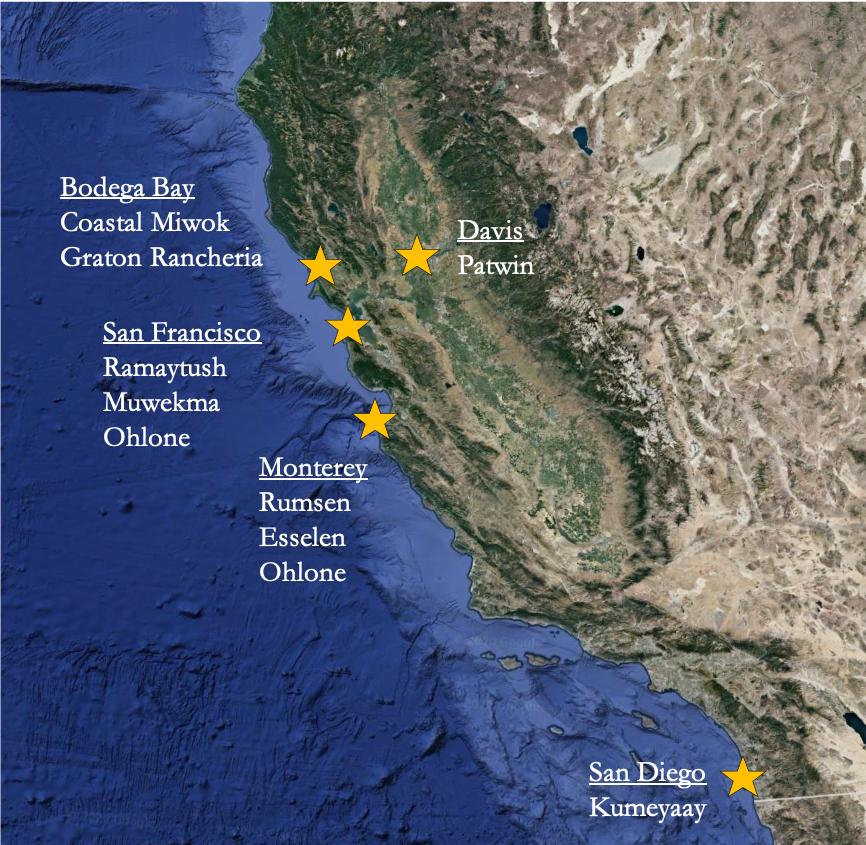
My graduate research took me up and down the coast of California and onto the homelands of numerous indigenous tribes and peoples whose cultures and relationships with the sea and coast were disrupted or erased through colonialism.
I primarily worked at the Bodega Marine Lab in Bodega Bay, CA, located on the land of the original villages Helapattai, Hime-takala, Ho-takala, Suwutenne, Tiwut-huya, and Tokau, and home to the Geluatamal tribe (Coastal Miwok and Southern Pomo).
Sources: Coast Miwok of Southern Marin Project, “The Names Before the Names” - Rebecca Solnit, Native Land Net
Bull Kelp (Nereocystis luetkeana) responses to warming temperatures and ocean acidification
June 2015 - January 2023
Collaborators: Dr. Jordan Hollarsmith, Tallulah Winquist, Dr. Ted Grosholz
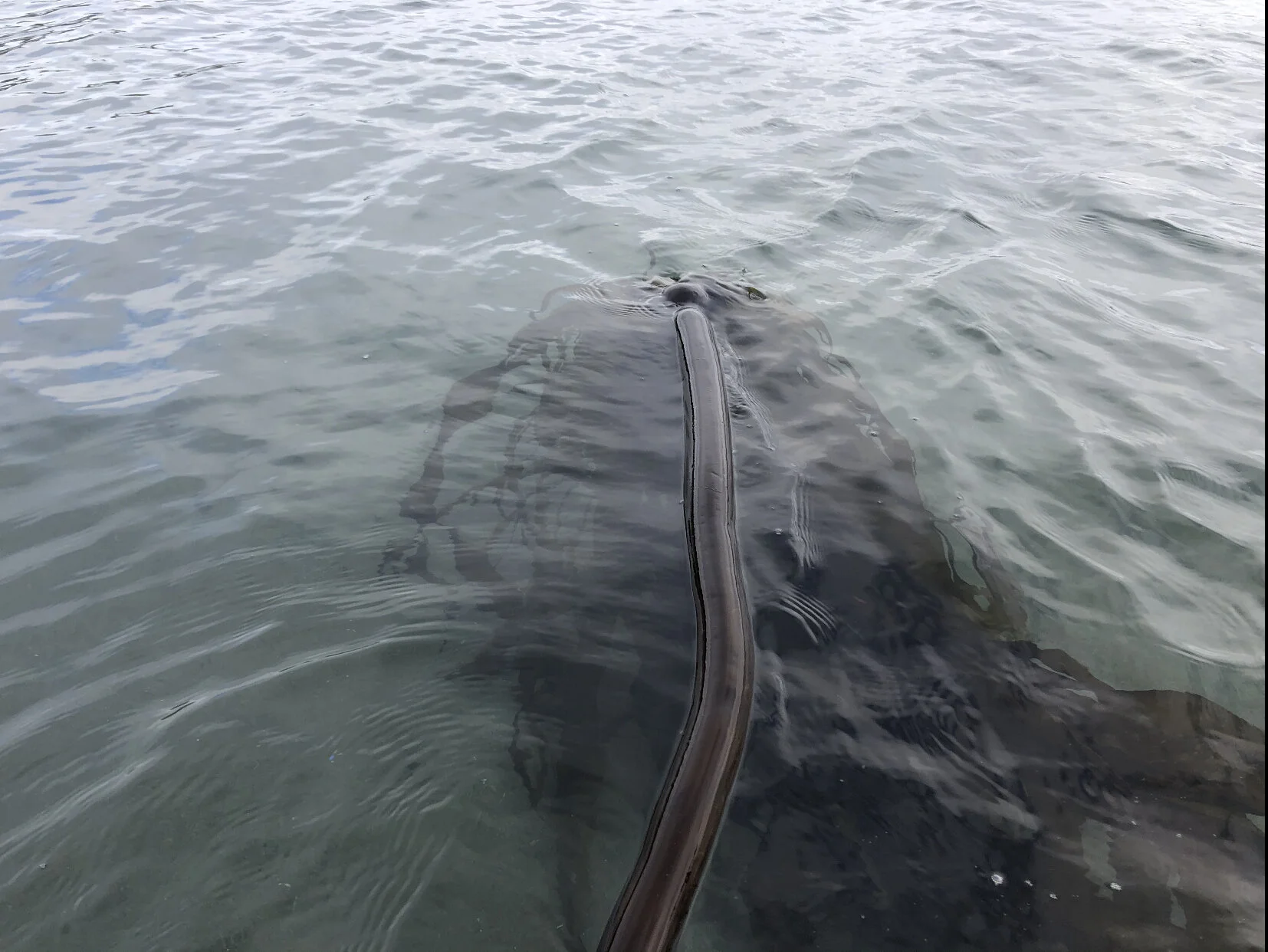
I collaborated with other UC Davis graduate students to assess the effects of temperature and pH on bull kelp (Nereocystis luetkeana) gametophyte growth and development. Results have been presented at JASM 2022 and ESA 2022, and are now published in the Journal of Phycology.
SCUBA Surveys of Tomales Bay’s Algae Communities
January 2022 - April 2023
Funding: Tomales Bay Watershed Council
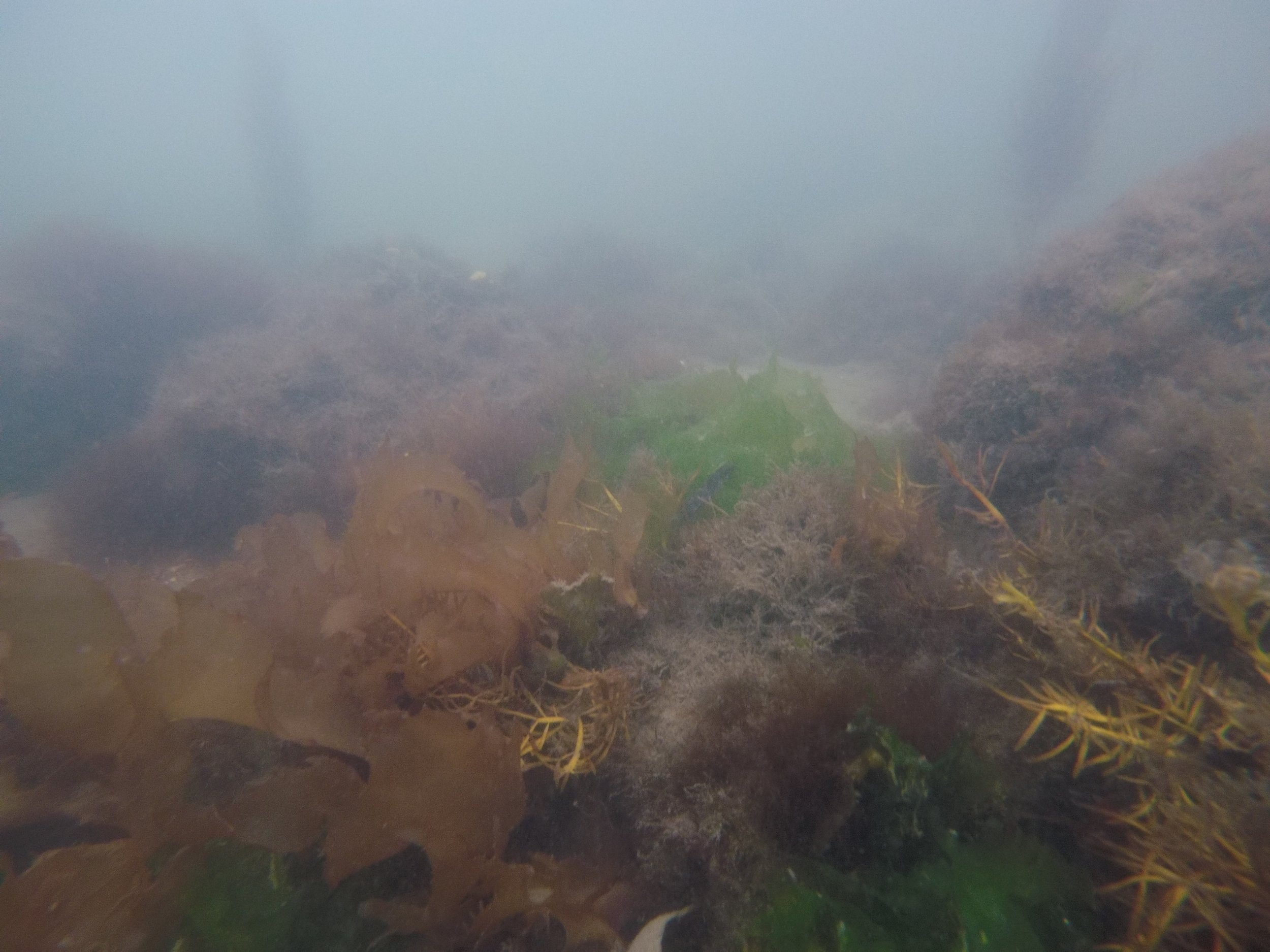
Tomales Bay, located at the northern edge of Point Reyes in Northern California, has a distinctly long, narrow shape that provides a unique linear estuarine gradient. Within Tomales Bay, there are a host of seaweed species and kelp communities that have not been documented in Western scientific literature. In order to better understand how the unique abiotic gradient of Tomales Bay impacts seaweed abundance and community composition, I led surveys of 6 sites along Tomales Bay’s west shore. Using 15m transects and .25m^2 quadrats, we documented invertebrate presence and algae abundance every 3 months in Tomales Bay.
Macrocystis pyrifera responses to competition and an estuarine gradient
June 2020 - August 2023
Collaborators: Suellen Dias, Genece Grisby, Dr. Ted Grosholz
Funding: UC Davis Jastro-Shields Research Fellowship
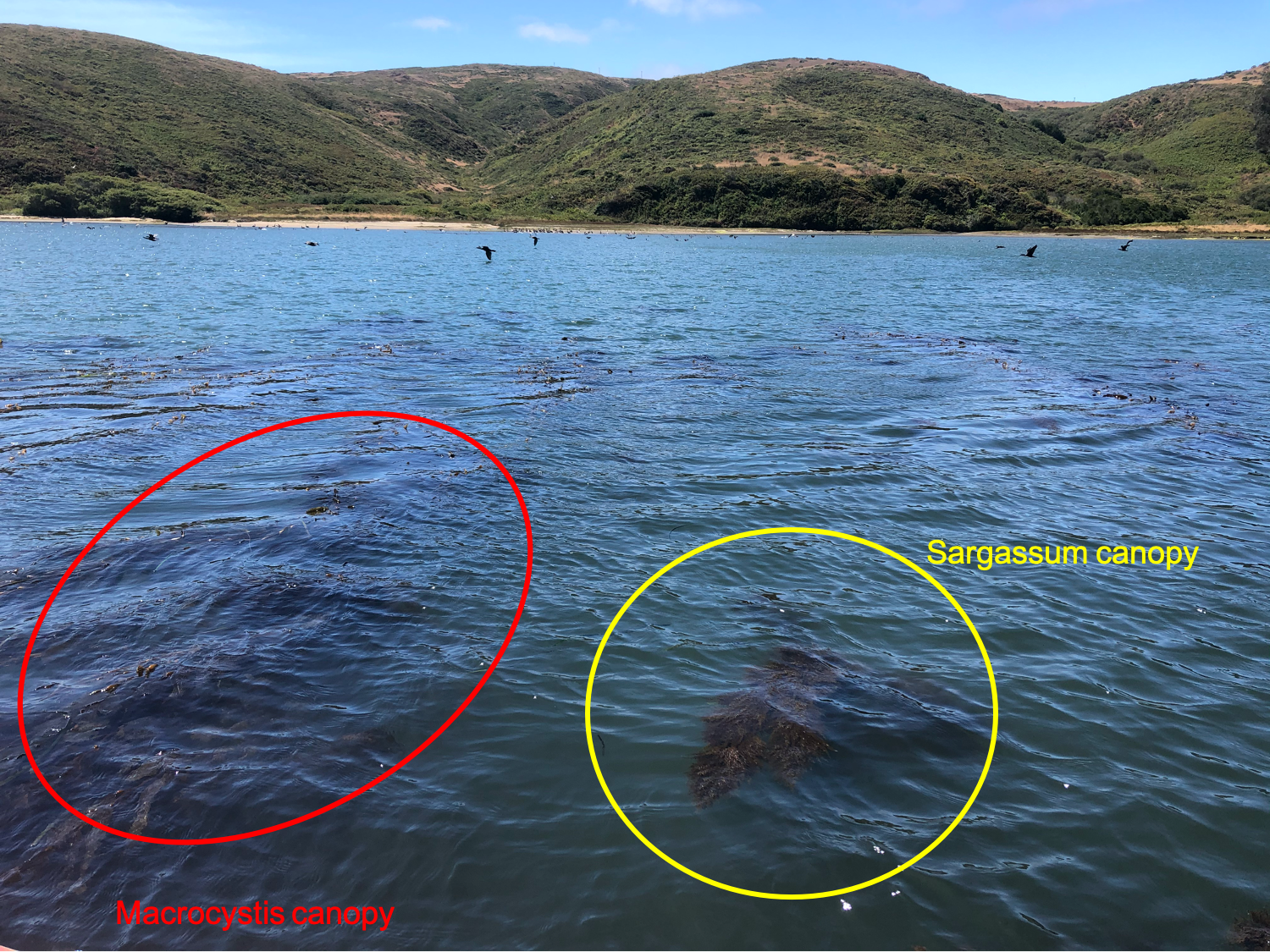
Both giant kelp (Macrocystis pyrifera) and the invasive wireweed (Sargassum muticum) are rarely found in estuaries, but both do occur in Tomales Bay at the northern end of the Point Reyes National Seashore. I assessed the effects of changing salinity and temperature conditions on giant kelp and wireweed reproduction and development. To do this, I collected giant kelp and wireweed propagules from several locations in Tomales Bay and culturing them in petri dishes where I can track their growth and survival. This research will help begin to answer questions regarding what factors specifically limit the distance of giant kelp and wireweed intrusion into bays and how giant kelp may be able to respond to multiple extreme stressors. Our manuscript on this research is currently in review with the Marine Ecology Progress Series.
The Impacts of Salinity and Temperature on Gametophyte Growth and Reproduction in Wakame (Undaria pinnatifida)
June 2021-August 2023
Collaborators: Suellen Dias, Genece Grisby, Dr. Ted Grosholz
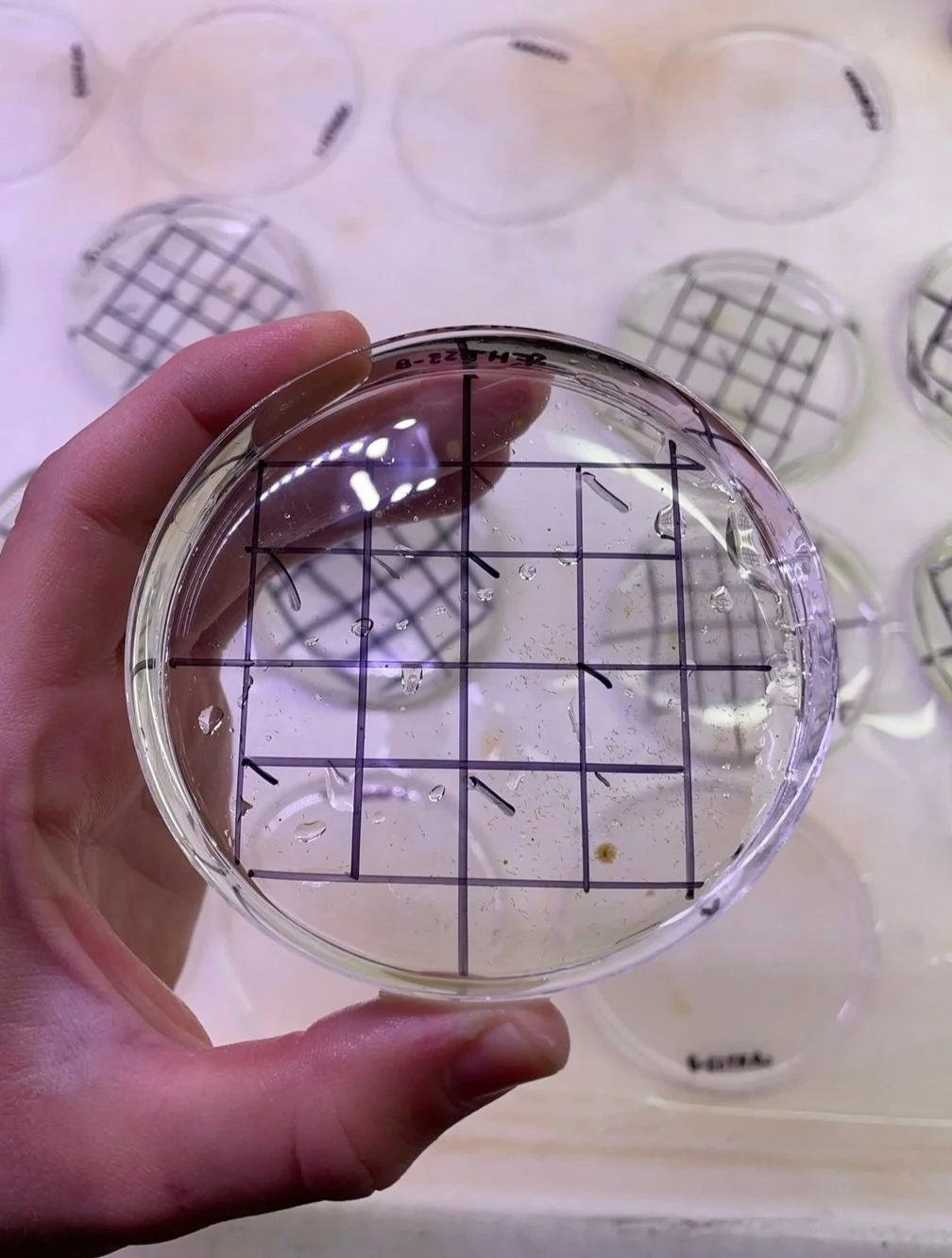
Wakame (Undaria pinnatifida) is an invasive kelp from Japan that became established in LA Harbor in 2001. Since then, it has spread from harbor to harbor, and can now be found in ports from Ensenada, MX to San Francisco, CA. In 2018 and 2019, during the large amounts of rainfall California received that year, there were verbal reports that the amount of Wakame present in northern California was decreasing. Undergraduate Suellen Dias and I collected Wakame from San Francisco Harbor and brought it back to Bodega Marine Lab, where we cultured it under 5 different salinities and 2 temperatures to simulate the impacts of rising temperatures and fresher water on kelp development.
The role of Community and Citizen Science (CCS) programs in California’s Marine Protected Areas (MPAs)
March 2021 - January 2022
Collaborators: Dr. Ryan Meyer, Dr. Todd Harwell, Nicholas Peterson, and Dr. Heidi Ballard
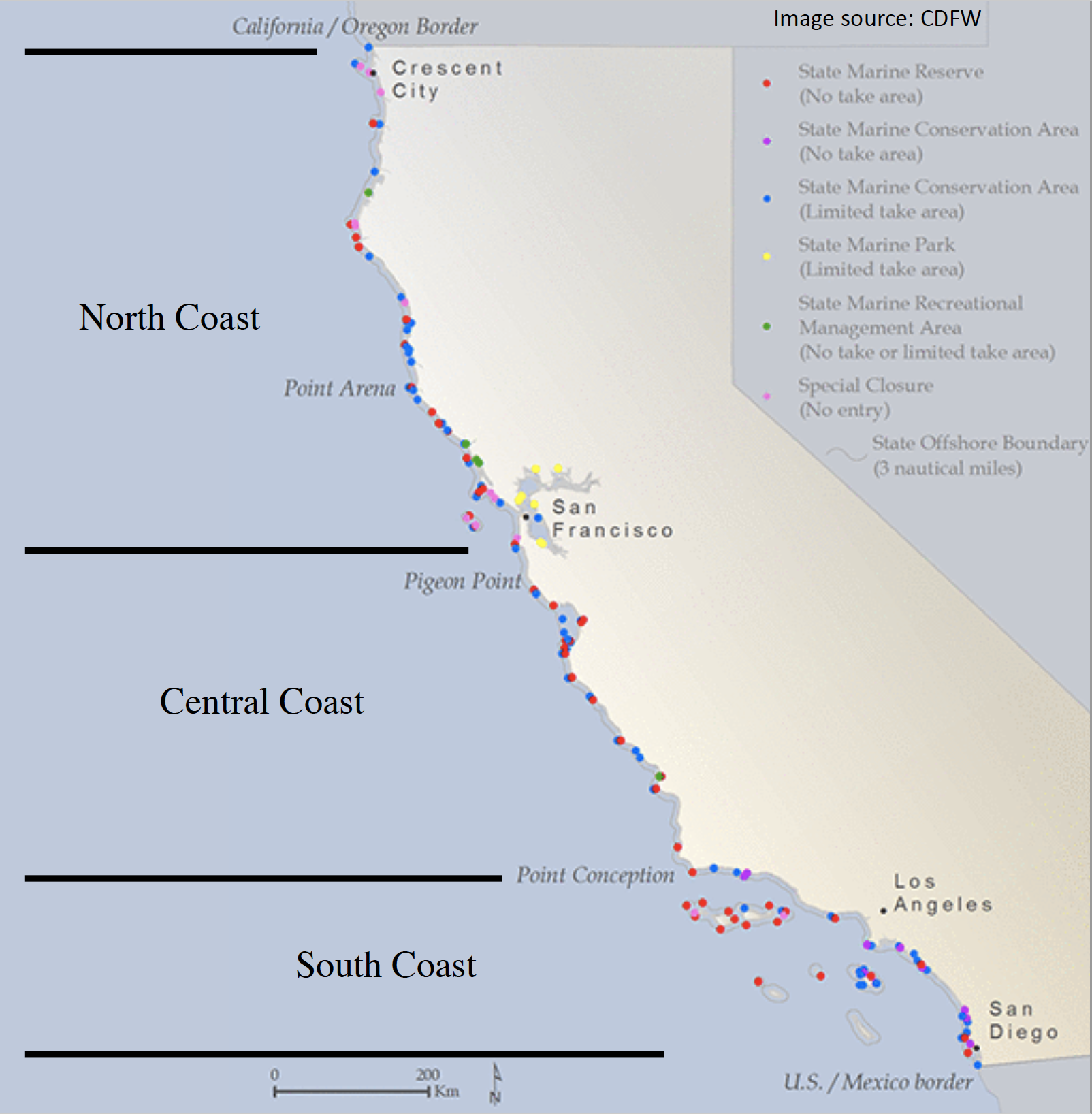
Over the past ten years, CCS projects have been a valuable component of monitoring efforts in California’s MPA system. I am currently working with the UC Davis Center for Community and Citizen Science to gather existing data about CCS projects operating along the California coast. These efforts involve extensive conversations with program organizers and state managers, design of social science questions and surveys, and data management and synthesis. In early 2022, we contributed a report to the statewide decadal review of MPAs.
The Historical Record of Algae in Tomales Bay
June 2020 - December 2020
Collaborator: Allie Vann
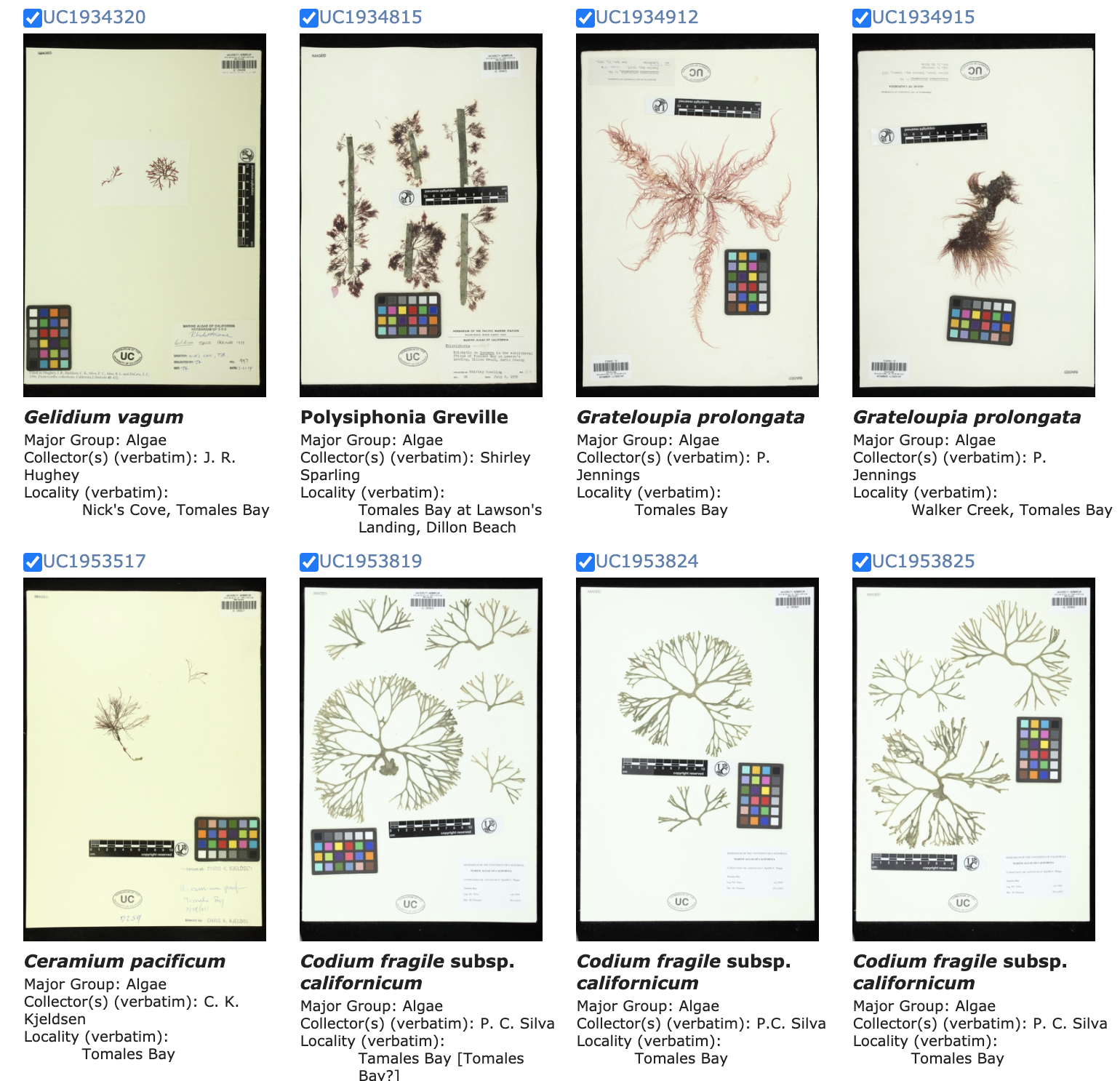
Through the BML-SRJC internship program, Allie Vann and I created a historical record of macroalgae in Tomales Bay to investigate how these communities have changed over the 20th century. Using the UC Berkeley Jepson Herbarium online database, we collected information on 1017 seaweed individuals collected since 1898. We analyzed the data to see which phylum of seaweed in Tomales Bay is more prevalent, if the number of nonnative species has increased over the years, and which areas did these seaweeds tend to thrive. Reconstructing the historical macroalgal community composition of Tomales Bay will allow us to understand how these communities have changed over time and predict the future of these communities under climate change. Allie presented this poster at the WSN 2020 Online Meeting.
“Undaria pinnatifida Gametophyte Responses To Salinity”
August - October 2019
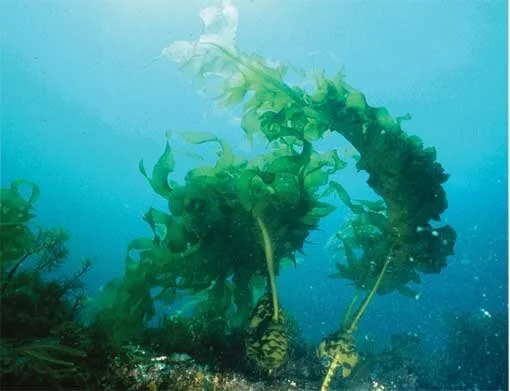
In 2019, California experienced above normal levels of rainfall, which coincided with verbal reports of decreased U. pinnatifida presence in Monterey Harbor and San Francisco Bay. To determine whether decreased salinities (a result of increased rainfall) impacted the presence of U. pinnatifida, I conducted an experiment culturing U. pinnatifida gametophytes under 5 different salinity levels over a two-month period. Diatom contamination prevented robust data analysis, but preliminary results show that Undaria gametophytes can survive at low salinities, albeit at reduced levels. I presented preliminary results as a poster at the WSN conference in Ensenada, MX in October 2019.